
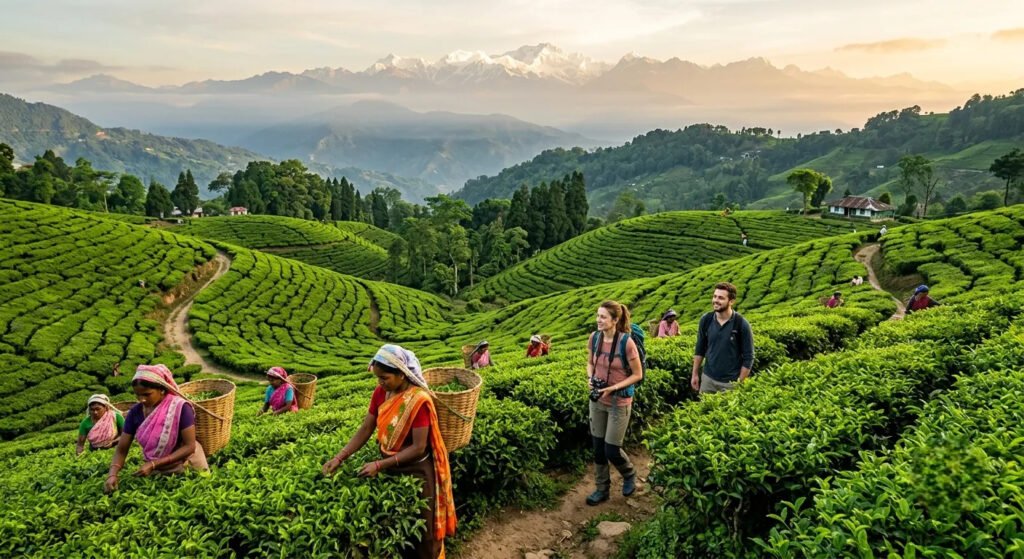
Discover the beauty of North East India’s tea estates, rich heritage, breathtaking landscapes, and authentic cultural experiences in this complete travel guide.
Why North East India’s Tea Estates Are Every Traveler’s Dream Destination
Imagine waking up to rolling green hills covered with endless tea gardens, breathing in crisp mountain air, and watching the sunrise paint the valleys in golden hues. Add vibrant tribal cultures, centuries-old traditions, delicious local cuisine, wildlife, and warm hospitality, and you have one of India’s most unforgettable travel destinations.
North East India’s often called India’s hidden paradise. While destinations like Goa, Rajasthan, and Kerala receive millions of visitors every year, the northeastern states remain comparatively untouched. This makes the region perfect for travelers seeking authentic experiences away from crowded tourist hotspots.
From the world-famous tea estates of Assam to the colonial charm of Darjeeling, the living root bridges of Meghalaya, the monasteries of Sikkim, and the colorful tribal heritage of Nagaland and Arunachal Pradesh, every journey through North East India feels unique.
Whether you’re a nature lover, tea enthusiast, photographer, wildlife explorer, or cultural traveler, North East India offers experiences you simply won’t find anywhere else.
Why Visit North East India?
North East India consists of eight beautiful states:
- Assam
- Meghalaya
- Arunachal Pradesh
- Nagaland
- Manipur
- Mizoram
- Tripura
- Sikkim
Each destination has its own language, traditions, cuisine, festivals, and landscapes.
Unlike many popular tourist destinations, North East India still offers peaceful travel experiences where visitors can connect deeply with nature and local communities.
Highlights include:
- Endless tea plantations
- Snow-capped Himalayan views
- Dense forests
- Waterfalls
- Rivers
- Wildlife sanctuaries
- Ancient monasteries
- Colonial architecture
- Tribal villages
- Traditional festivals
The Famous Tea Estates of North East India
Tea is much more than a beverage here—it’s a way of life.
The fertile soil, ideal rainfall, and pleasant climate create perfect growing conditions for some of the world’s finest teas.
Visitors can explore:
- Historic tea plantations
- Tea factories
- Tea museums
- Tea tasting sessions
- Luxury tea bungalows
- Tea harvesting demonstrations
Walking through emerald-green plantations during sunrise is one of the most memorable experiences the region offers.
Assam: India’s Tea Capital
Assam produces more tea than any other region in India and is recognized worldwide for its strong, malty black tea.
Many tea gardens are over a century old and continue producing premium-quality tea using a blend of traditional knowledge and modern techniques.
Popular tea-growing areas include:
- Jorhat
- Dibrugarh
- Tinsukia
- Golaghat
- Sivasagar
Visitors can:
- Tour working tea factories
- Learn tea processing techniques
- Watch skilled tea pluckers
- Participate in tea tasting
- Stay in restored colonial tea estates
The peaceful atmosphere makes Assam one of the best destinations for slow travel.
Darjeeling’s Timeless Charm
Although geographically located in West Bengal, Darjeeling is closely connected with many North East travel circuits.
Known as the “Champagne of Teas,” Darjeeling produces delicate teas with floral aromas enjoyed around the world.
Beyond tea, visitors can enjoy:
- Heritage toy train rides
- Himalayan mountain views
- Colonial-era architecture
- Local markets
- Buddhist monasteries
- Sunrise at Tiger Hill
The combination of tea culture and mountain beauty creates an unforgettable travel experience.
Tea Tourism: More Than Just Drinking Tea
Tea tourism has become increasingly popular among domestic and international travelers.
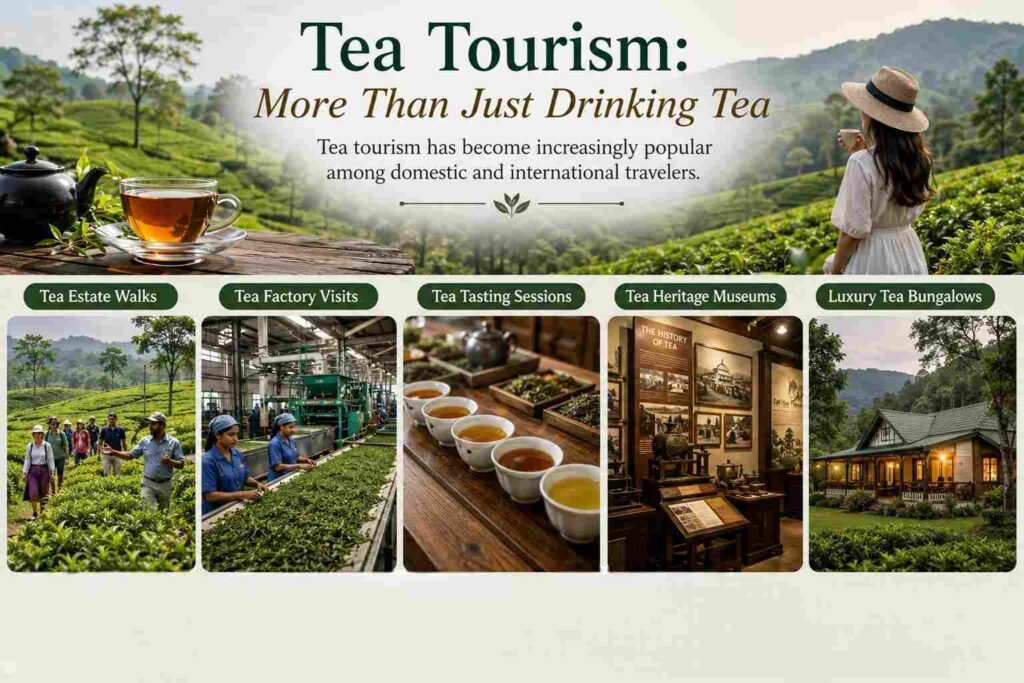
Experiences include:
Tea Estate Walks
Guided walks explain cultivation methods, plant varieties, and harvesting techniques.
Tea Factory Visits
Observe how fresh leaves transform into premium loose-leaf tea.
Tea Tasting Sessions
Experts teach visitors how aroma, color, and flavor differ among tea varieties.
Tea Heritage Museums
Discover the fascinating history of India’s tea industry and its influence on local communities.
Luxury Tea Bungalows
Many restored colonial residences now welcome guests seeking peaceful countryside escapes.
Rich Heritage and Cultural Diversity
North East India is home to hundreds of indigenous communities.
Every tribe has preserved its unique traditions, including:
- Traditional dress
- Folk music
- Dance
- Festivals
- Handicrafts
- Wood carving
- Bamboo craftsmanship
- Weaving
- Local storytelling
Travelers often describe cultural interactions as one of the highlights of their journey.
Traditional Festivals
The region celebrates colorful festivals throughout the year.
Popular celebrations include:
- Bihu in Assam
- Hornbill Festival in Nagaland
- Losar in Sikkim
- Wangala Festival in Meghalaya
These festivals showcase music, dance, local cuisine, sports, and traditional arts.
Colonial Heritage
British influence remains visible throughout many tea-growing regions.
Visitors can still see:
- Colonial tea bungalows
- Historic churches
- Railway stations
- Tea factories
- Heritage clubs
These sites provide fascinating insights into India’s tea history.
Wildlife Adventures
Nature lovers will find plenty to explore.
Popular wildlife destinations include:
Kaziranga National Park
Famous for the endangered one-horned rhinoceros, Kaziranga also protects elephants, wild buffalo, deer, and numerous bird species.
Manas National Park
A UNESCO World Heritage Site known for its rich biodiversity and scenic beauty.
Namdapha National Park
One of India’s largest protected forests, offering exceptional birdwatching and trekking opportunities.
Scenic Landscapes That Leave Visitors Speechless
North East India offers remarkable natural beauty.
You’ll discover:
- Rolling tea gardens
- Misty mountains
- Crystal-clear rivers
- Waterfalls
- Pine forests
- Bamboo groves
- Peaceful villages
- Cloud-covered valleys
Photography enthusiasts will never run out of breathtaking views.
Local Cuisine Worth Exploring
Every state has distinctive flavors.
Popular dishes include:
Assam
- Assamese Thali
- Fish curry
- Duck curry
- Bamboo shoot dishes
Meghalaya
- Jadoh
- Tungrymbai
Nagaland
- Smoked pork
- Bamboo shoot recipes
Sikkim
- Momos
- Thukpa
- Gundruk
Don’t forget to sample locally produced tea with traditional snacks.
Adventure Activities
Besides tea tourism, travelers can enjoy:
- Trekking
- River rafting
- Birdwatching
- Camping
- Village walks
- Cycling
- Mountain photography
- Jeep safaris
- Boating
- Nature trails
Adventure lovers will appreciate the region’s diversity.
Shopping for Local Crafts
Bring home authentic souvenirs such as:
- Handwoven shawls
- Bamboo products
- Handmade jewelry
- Organic tea
- Traditional baskets
- Wooden carvings
- Tribal artwork
- Handmade textiles
Supporting local artisans helps preserve traditional craftsmanship.
Best Time to Visit
The ideal travel season depends on your interests.
| Season | Highlights |
|---|---|
| October–March | Pleasant weather, sightseeing, festivals |
| April–June | Lush tea gardens, tea harvesting season |
| July–September | Heavy monsoon, vibrant greenery, fewer crowds |
For most travelers, October through March offers the best overall experience.
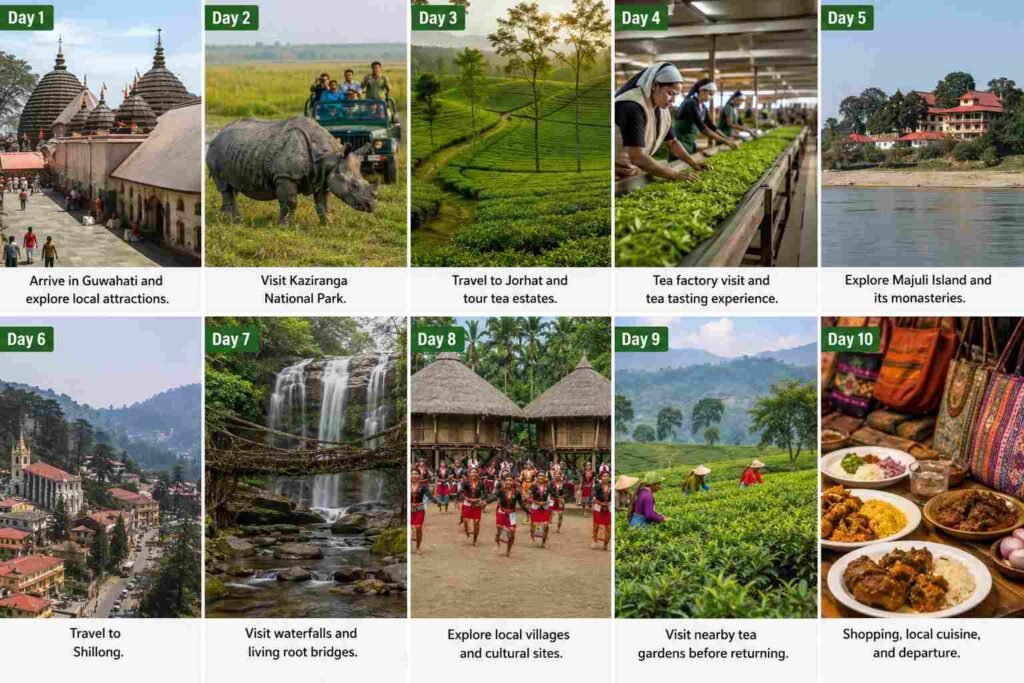
Suggested 10-Day North East India Itinerary
Responsible Tourism Tips
Travel respectfully by following a few simple guidelines:
- Support local businesses.
- Purchase authentic handicrafts.
- Respect local customs and traditions.
- Avoid littering.
- Carry reusable water bottles.
- Stay on marked trails.
- Ask permission before photographing people.
- Choose eco-friendly accommodations whenever possible.
Responsible travel helps preserve these beautiful destinations for future generations.
Why Tea Lovers Should Visit At Least Once
Tea lovers gain a completely new appreciation after visiting the plantations.
Instead of simply drinking tea, you’ll understand:
- How tea is cultivated
- Harvesting methods
- Processing techniques
- Regional flavor differences
- The dedication of tea-growing communities
Every cup tells a story.
Travel Tips
Before visiting:
- Carry comfortable walking shoes.
- Pack light jackets for cooler evenings.
- Keep cash for rural markets.
- Hire local guides for cultural experiences.
- Book accommodations during festival seasons in advance.
- Respect photography restrictions where applicable.
- Stay hydrated during plantation walks.
Frequently Asked Questions
Is North East India safe for tourists?
Yes. Most tourist destinations are considered safe. As with any trip, stay informed about local travel advisories and follow standard safety precautions.
Which state has the best tea estates?
Assam is globally renowned for black tea, while Darjeeling is celebrated for premium aromatic teas. Both offer outstanding experiences.
When is the best season to visit tea gardens?
From October to March, for comfortable sightseeing, while April and May are excellent for seeing tea harvesting.
Can visitors stay inside the tea estates?
Yes. Many heritage tea estates offer beautifully restored bungalows and boutique accommodations.
How many days are enough?
A journey of 8–12 days allows visitors to experience tea estates, wildlife, culture, and scenic landscapes comfortably.
Are tea factory tours available?
Many tea estates welcome visitors for guided tours and tea tasting sessions, although booking may be required.
Is North East India suitable for family vacations?
Absolutely. Families can enjoy nature, cultural attractions, wildlife, and relaxing stays in tea estates.
What souvenirs should I buy?
Organic tea, handwoven textiles, bamboo crafts, tribal artwork, handmade jewelry, and locally produced spices make excellent souvenirs.
Final Thoughts
North East India is much more than a destination—it’s an experience that combines nature, culture, history, and hospitality in extraordinary ways. From the endless green tea plantations of Assam to the vibrant traditions of indigenous communities and the breathtaking landscapes stretching across mountains and valleys, every moment offers something memorable.
Whether you’re sipping freshly brewed tea overlooking mist-covered estates, exploring wildlife sanctuaries, attending colorful festivals, or learning about centuries-old traditions, you’ll discover why this remarkable region continues to captivate travelers from around the world.
If you’re looking for a journey that goes beyond ordinary sightseeing, North East India’s tea estates and rich heritage deserve a place on your travel bucket list. Once you experience its beauty, authenticity, and warmth, you’ll understand why so many travelers dream of returning again and again.
References
- Ministry of Tourism, Government of India
- Assam Tourism Development Corporation
- Incredible India
- UNESCO World Heritage Centre
- Tea Board India